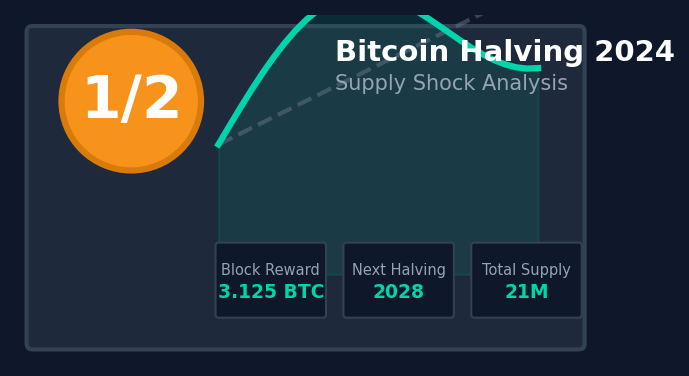
Bitcoin Halving 2024 Analysis
Bitcoin

Bitcoin Halving 2024: Complete Impact Analysis and Price Predictions

The fourth Bitcoin halving event, which occurred in April 2024, has fundamentally reshaped the cryptocurrency mining landscape and supply dynamics. As we analyze the aftermath and project future trends, understanding the historical context and economic implications becomes crucial for both miners and investors.

What is Bitcoin Halving?

Bitcoin halving is a pre-programmed event that occurs approximately every four years, reducing the block reward miners receive by 50%. This mechanism, embedded in Bitcoin's protocol by its creator Satoshi Nakamoto, serves as a deflationary measure designed to control the total supply of Bitcoin at 21 million coins.

The most recent halving reduced the block reward from 6.25 BTC to 3.125 BTC per block. This reduction has significant implications for the entire Bitcoin ecosystem, affecting everything from mining profitability to market sentiment and long-term price projections.
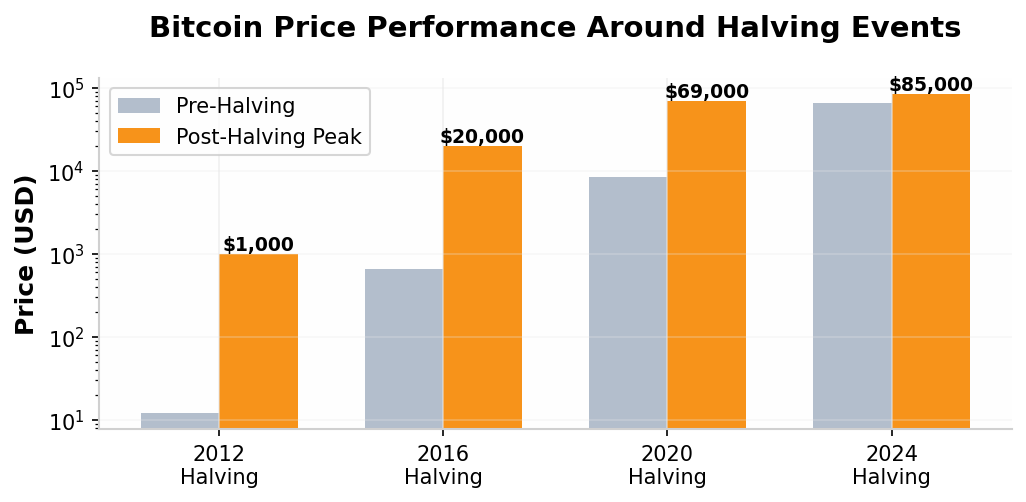
Bitcoin Halving Historical Price Chart

Historical Bitcoin price performance following previous halving events. Data source: CoinMarketCap

Historical Performance Analysis

Examining the three previous halving events provides valuable insights into potential market behavior:

First Halving (November 2012)

The initial halving reduced the reward from 50 BTC to 25 BTC. In the 12 months following this event, Bitcoin's price surged from approximately $12 to over $1,000, representing an increase of more than 8,000%.

Second Halving (July 2016)

The second halving reduced rewards from 25 BTC to 12.5 BTC. Bitcoin's price rose from around $650 to nearly $20,000 by December 2017.

Third Halving (May 2020)

The third halving reduced rewards from 12.5 BTC to 6.25 BTC. Bitcoin's price climbed from approximately $8,500 to an all-time high of nearly $69,000 in November 2021.

Impact on Mining Economics

The reduction in block rewards directly affects mining profitability. With the reward now at 3.125 BTC, miners must optimize operations more carefully than ever before:

  • Operational Efficiency: Miners with access to cheap electricity and efficient hardware maintain competitive advantages
  • Hash Rate Consolidation: Less efficient miners may be forced to shut down, potentially centralizing hash power among larger operations
  • Transaction Fee Dependency: As block rewards diminish, transaction fees become increasingly important for miner revenue
  • Hardware Innovation: The pressure for efficiency drives continued development of more advanced ASIC miners

Price Prediction Models

Several analytical frameworks attempt to predict Bitcoin's price trajectory following the halving:

Stock-to-Flow Model

Popularized by analyst PlanB, the stock-to-flow model measures the relationship between existing supply (stock) and new production (flow). Following the 2024 halving, Bitcoin's stock-to-flow ratio increased significantly, with some projections suggesting price targets between $100,000 and $500,000 in the coming years.

Power Law Model

The power law model, based on logarithmic regression analysis of Bitcoin's historical price data, suggests a long-term upward trajectory with decreasing volatility.

Conclusion

The 2024 Bitcoin halving represents a pivotal moment in the cryptocurrency's evolution. While past performance does not guarantee future results, the combination of reduced supply issuance, growing institutional adoption, and increasing global awareness creates a compelling investment thesis.

Alex Thompson

Alex Thompson

Senior Cryptocurrency Analyst with over 8 years of experience in blockchain technology and digital asset markets.

Advertisement
Ethereum Staking Guide
Ethereum

Ethereum Staking: A Beginner's Guide to Earning Passive Income

Ethereum's transition to Proof of Stake (PoS) through "The Merge" has opened new opportunities for ETH holders to earn passive income by participating in network validation. This comprehensive guide explains everything you need to know about Ethereum staking.

What is Ethereum Staking?

Staking is the process of actively participating in transaction validation on a Proof of Stake blockchain. Unlike Proof of Work mining, which requires expensive hardware and significant electricity consumption, staking allows participants to validate transactions and create new blocks by locking up (staking) their cryptocurrency holdings.

Staking Methods

1. Solo Staking (32 ETH Required)

Solo staking is the most decentralized and secure method. You run your own validator node, maintaining full control over your keys and rewards. This method requires 32 ETH minimum deposit, dedicated hardware, reliable internet connection, and technical knowledge.

2. Staking as a Service

Staking services handle the technical aspects of running a validator node while you maintain control of your withdrawal keys. Popular providers include Allnodes, Stakefish, and Figment.

3. Pooled Staking (Less than 32 ETH)

Pooled staking allows users with less than 32 ETH to participate by combining their funds with other stakers. Options include Lido, Rocket Pool, and Coinbase.

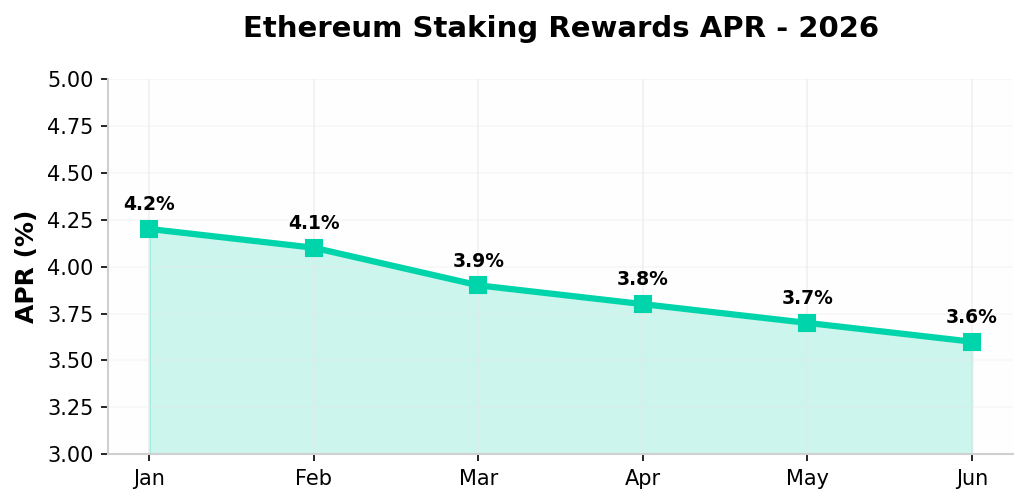
Ethereum Staking Rewards Chart

Historical Ethereum staking rewards APR. Data source: Beaconcha.in

Understanding Staking Rewards

Ethereum staking rewards depend on several factors including base reward rate (currently 3-5% APR), transaction fees, and MEV (Maximal Extractable Value) profits.

Risks to Consider

  • Slashing Risk: Validators can lose a portion of their stake for malicious behavior or technical failures
  • Lock-up Period: Staked ETH cannot be withdrawn immediately
  • Smart Contract Risk: Pooled staking protocols rely on smart contracts that could have vulnerabilities
  • Market Risk: The value of ETH can fluctuate, affecting the dollar value of your rewards

Conclusion

Ethereum staking represents an excellent opportunity for ETH holders to earn passive income while contributing to network security. Whether you choose solo staking, staking services, or pooled options, understanding the risks and rewards is essential.

Sarah Chen

Sarah Chen

Blockchain developer and DeFi researcher with expertise in Ethereum ecosystem protocols.

Advertisement
DeFi Yield Farming
DeFi

Top 10 DeFi Yield Farming Strategies for 2026

Decentralized Finance (DeFi) has revolutionized how we think about earning returns on cryptocurrency assets. Yield farming allows users to earn rewards by providing liquidity to decentralized protocols. This guide explores the most profitable and secure strategies for 2026.

What is Yield Farming?

Yield farming is the practice of staking or lending crypto assets in DeFi protocols to generate returns. These returns typically come from trading fees, protocol governance token rewards, lending interest, and incentive programs.

Strategy 1: Stablecoin Liquidity Provision

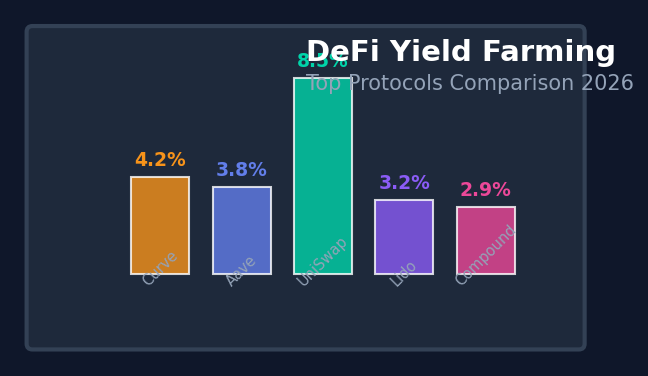
Providing liquidity to stablecoin pairs on decentralized exchanges like Curve Finance offers relatively low-risk returns. Expected APR: 3-8%. Risk Level: Low.

Strategy 2: Blue-Chip Token Staking

Staking established tokens like ETH, BTC wrappers, and major altcoins in lending protocols such as Aave and Compound. Expected APR: 2-6%.

Strategy 3: Concentrated Liquidity on Uniswap V3

Uniswap V3 introduced concentrated liquidity, allowing LPs to specify price ranges for their capital. Expected APR: 10-50% (highly variable).

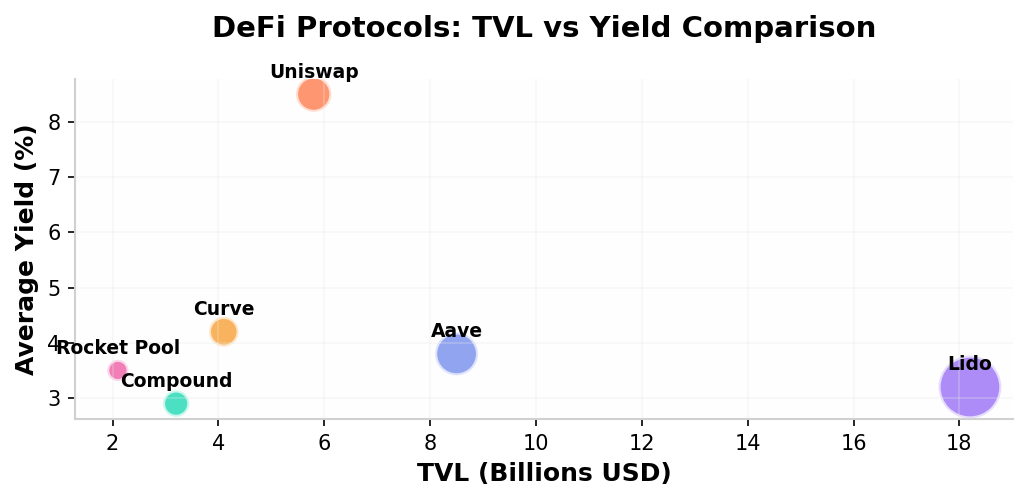
DeFi Protocols Comparison

Comparison of top DeFi protocols by Total Value Locked (TVL) and average yields. Data: DeFiLlama

Understanding and Managing Risks

Impermanent Loss

When providing liquidity to trading pairs, price divergence between the two assets can result in losses compared to simply holding.

Smart Contract Risk

DeFi protocols rely on smart contracts that may contain bugs or vulnerabilities. Always check audit reports and consider insurance options.

Conclusion

DeFi yield farming continues to evolve, offering increasingly sophisticated ways to generate returns on crypto assets. Success requires understanding the risks, diversifying across strategies, and staying informed about protocol developments.

Marcus Williams

Marcus Williams

DeFi strategist and quantitative analyst. Formerly at major DeFi protocols, now focused on yield optimization research.

Advertisement
Solana Ecosystem
Altcoins

Solana Ecosystem Deep Dive: Projects, Performance, and Future Outlook

Solana has emerged as one of the most vibrant blockchain ecosystems in 2026, with significant improvements in network stability, growing developer activity, and expanding DeFi and NFT markets. This comprehensive analysis examines the current state and future potential of the Solana ecosystem.

Network Performance Improvements

Following the network outages that plagued Solana in 2022 and early 2023, the development team has implemented substantial upgrades to improve reliability. The Firedancer validator client, developed by Jump Crypto, has significantly enhanced network throughput and reduced downtime incidents.

Current network statistics show Solana processing over 65,000 transactions per second with average block times of 400 milliseconds. Transaction costs remain among the lowest in the industry at approximately $0.00025 per transaction.

DeFi Ecosystem Growth

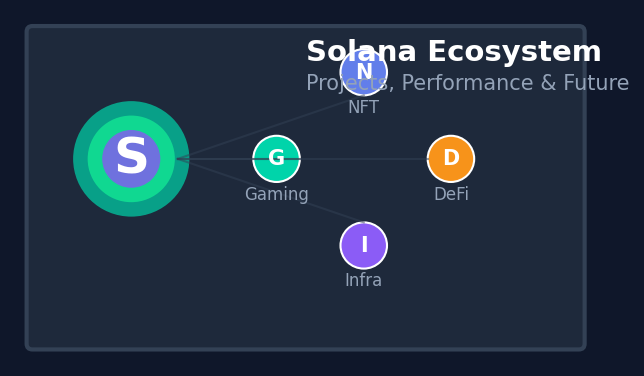
Solana's DeFi ecosystem has matured considerably with several protocols achieving significant total value locked (TVL):

  • Marinade Finance: Leading liquid staking protocol with over $1.2B TVL
  • Jupiter: Primary DEX aggregator handling $500M+ daily volume
  • Kamino Finance: Concentrated liquidity management and lending
  • Drift Protocol: Perpetual futures and spot trading

NFT Market Resurgence

Solana's NFT ecosystem has experienced a remarkable resurgence in 2026. Platforms like Tensor and Magic Eden have introduced innovative features including compressed NFTs, which reduce minting costs by 99% while maintaining full metadata and ownership verification.

Developer Activity

According to Electric Capital's Developer Report, Solana ranks second only to Ethereum in active developer count. The Solana Foundation's grant programs and hackathons have successfully attracted talent from traditional tech backgrounds.

Investment Considerations

While Solana presents compelling growth opportunities, investors should consider several risk factors including network centralization concerns, competition from other Layer 1 blockchains, and regulatory uncertainty surrounding proof-of-stake tokens.

Conclusion

Solana's ecosystem has demonstrated remarkable resilience and growth. With continued technical improvements and expanding use cases, Solana remains a significant player in the Layer 1 blockchain space. However, investors should maintain diversified portfolios and conduct thorough due diligence.

Sarah Chen

Sarah Chen

Blockchain developer and DeFi researcher with expertise in multi-chain ecosystems.

Advertisement
Crypto Wallet Security
Security

Essential Crypto Wallet Security: Protect Your Digital Assets in 2026

With cryptocurrency thefts exceeding $2.2 billion in 2025, securing your digital assets has never been more critical. This comprehensive guide covers the latest security best practices, emerging threats, and proven strategies to keep your crypto safe.

The Current Threat Landscape

Cryptocurrency security threats have evolved significantly. While exchange hacks dominated headlines in earlier years, 2025-2026 has seen a shift toward sophisticated social engineering attacks, phishing campaigns, and malware specifically targeting crypto users.

Hardware Wallet Best Practices

Hardware wallets remain the gold standard for securing significant cryptocurrency holdings. Leading devices from Ledger, Trezor, and Keystone offer military-grade security with offline private key storage.

Setup Recommendations

  • Always purchase hardware wallets directly from the manufacturer
  • Verify device authenticity using manufacturer verification tools
  • Generate seed phrases in a secure, offline environment
  • Store backup seed phrases in multiple physical locations
  • Never store seed phrases digitally or photograph them

Multi-Signature Wallets

For institutional investors and high-net-worth individuals, multi-signature wallets provide an additional layer of security by requiring multiple private keys to authorize transactions. Popular implementations include Gnosis Safe and Electrum multisig.

Recognizing and Avoiding Scams

The most common scams in 2026 include fake airdrops, impersonation of support staff, fraudulent investment schemes promising guaranteed returns, and malicious browser extensions that replace wallet addresses during copy-paste operations.

Emerging Security Technologies

New security solutions include social recovery wallets (ERC-4337 account abstraction), biometric authentication integration, and decentralized identity verification systems that reduce reliance on seed phrases.

Conclusion

Cryptocurrency security requires constant vigilance and adaptation. By implementing layered security measures, staying informed about emerging threats, and following established best practices, you can significantly reduce the risk of losing your digital assets.

Marcus Williams

Marcus Williams

Security researcher and DeFi strategist focused on protocol risk assessment.

Advertisement
NFT Market Analysis
NFTs

NFT Market Recovery 2026: Beyond Digital Art to Real-World Utility

The NFT market has undergone a dramatic transformation since the speculative frenzy of 2021-2022. In 2026, non-fungible tokens have evolved far beyond profile pictures and digital art, finding practical applications across industries from real estate to supply chain management.

Market Overview

After the market correction that saw NFT trading volumes decline by over 90% from peak levels, 2025-2026 has witnessed a sustainable recovery driven by utility-focused projects rather than speculation. Total NFT market capitalization has stabilized at approximately $18 billion, with monthly trading volumes consistently exceeding $2 billion.

Beyond Digital Art: Real-World Applications

Real Estate Tokenization

Property ownership records are increasingly being maintained as NFTs on blockchain networks. This approach reduces fraud, simplifies transfers, and enables fractional ownership of high-value properties. Platforms like RealT and Lofty have tokenized over $500 million in real estate assets.

Supply Chain and Provenance

Luxury brands including LVMH, Nike, and Tiffany have adopted NFTs for product authentication and provenance tracking. Consumers can verify the authenticity of high-value items by checking their associated NFT on the blockchain.

Gaming and Virtual Worlds

Blockchain gaming has matured significantly with titles like Illuvium, Star Atlas, and Big Time delivering AAA-quality experiences where in-game assets are truly owned by players as NFTs.

Technical Innovations

Compressed NFTs on Solana have reduced minting costs by 99%, while Ethereum's ERC-6551 token-bound accounts enable NFTs to own other assets and interact with smart contracts directly.

Investment Perspective

While the speculative NFT market of 2021 has largely disappeared, the underlying technology has found legitimate use cases. Investors should focus on projects with clear utility, strong teams, and sustainable business models rather than chasing hype.

Conclusion

The NFT market has successfully transitioned from a speculative bubble to a technology with genuine utility. As blockchain infrastructure continues to improve and more industries recognize the benefits of digital ownership, NFTs are positioned for sustainable long-term growth.

Emma Rodriguez

Emma Rodriguez

Regulatory correspondent and NFT market analyst with background in digital asset law.